Medical Power Supplies:
Key Safety Standards & Requirements
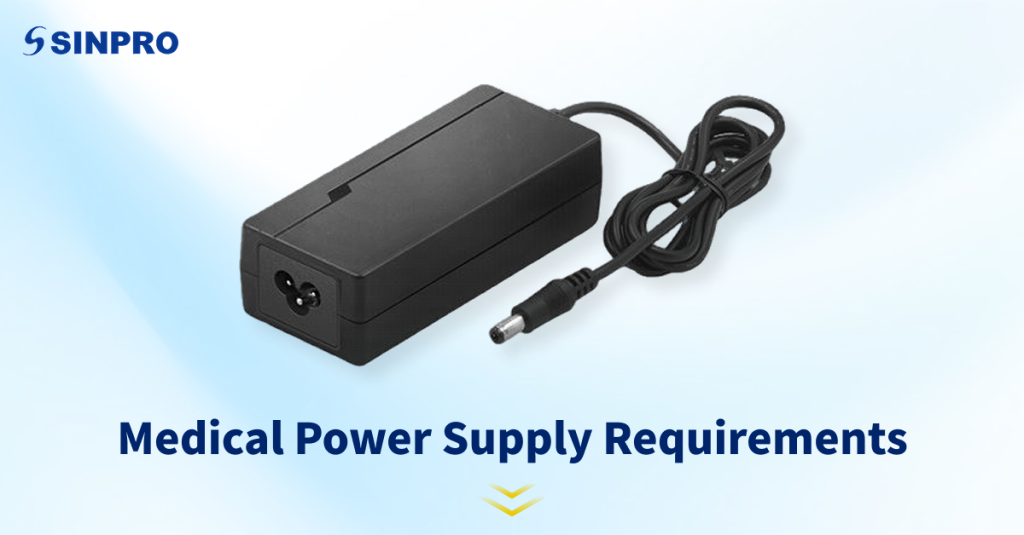
Medical power supplies are essential for healthcare equipment such as imaging systems, patient monitors, surgical devices, and home healthcare equipment. Yet, unlike typical commercial power supplies, medical-grade units must meet far stricter safety requirements because patients may be physically vulnerable or connected directly to electronic devices. Thus, we will explore the key medical power supply requirements in our guide below, helping manufacturers understand how to create safe, compliant, and dependable devices in healthcare environments.
The Core Medical Power Supply Standard: IEC 60601-1
The IEC 60601-1 is the global baseline standard for medical electrical equipment. It establishes requirements for electrical safety, insulation, leakage current, mechanical reliability, and overall risk management. This standard ensures that no single electrical, mechanical, or functional failure poses an unacceptable risk to patients or caregivers.
The scope of the IEC 60601-1 covers any device that is physically connected to a power source and used for monitoring, treating, or diagnosing a patient. Crucially, the standard applies to every component within the entire medical device system, including the power supply.
Manufacturers must also consider regional variations. In Europe, compliance is typically based on EN 60601-1, while the United States uses ANSI/AAMI ES60601 and Canada follows CSA 60601-1. Understanding these regional adaptations is especially important for companies developing products to meet medical power supply requirements in the USA and other global regulatory markets.
Means of Protection for Medical Power Supply Safety: MOOP vs. MOPP
The Means of Protection (MOP) concept is a fundamental pillar of the IEC 60601-1 standard. This framework was designed to quantify the safety barriers required to prevent a patient or operator from coming into contact with hazardous voltages (generally anything exceeding 42.4 VAC or 60 VDC). Because a patient may be unconscious, sedated, or have skin bypassed by electrodes, lowering their natural electrical resistance, the requirements for patient protection are stricter than those for operators.

What are MOPP and MOOP?
IEC 60601-1 divides safety requirements into two classifications based on the "end-user" of the protection:
- Means of Operator Protection (MOOP): These requirements apply to the clinical staff or technicians operating the equipment. MOOP standards are generally aligned with commercial IT equipment safety (IEC 62368-1), as operators are typically healthy individuals who can react to a shock.
- Means of Patient Protection (MOPP): These are the most stringent requirements that apply to circuits and components that may come into direct or indirect contact with patients. Since patients are often in a vulnerable state, the insulation barriers must be significantly more robust to ensure that even a single component failure cannot lead to a lethal discharge.
Key Technical Requirements for Medical Protection
To achieve the necessary MOP, engineers must focus on these technical parameters for the device:
- Isolation Voltage: The amount of voltage the insulation barrier can safely withstand without breakdown.
- Creepage Distance: The shortest path between conductive parts measured along a surface. This prevents tracking, where electricity travels across a surface due to moisture or dust.
- Clearance Distance: The direct air gap between conductive components. Maintaining adequate clearance prevents arcing, where electricity jumps through the air gap.
- Insulation Type: The number and strength of insulation layers used to prevent electric shock.
For a power supply to be considered "medical grade," it must typically provide two levels of protection, reaching 2xMOPP or 2xMOOP. This redundancy ensures that if one layer of insulation fails, a second remains to keep the user safe.
MOPP vs. MOOP Requirements Comparison
The following table outlines the minimum technical specifications required for each classification under IEC 60601-1.
| Classification |
Isolation (VAC) |
Creepage (mm) |
Clearance (mm) |
Insulation Type |
| 1xMOOP |
1500 |
2.5 |
2.0 |
Basic |
| 2xMOOP |
3000 |
5.0 |
4.0 |
Double / Reinforced |
| 1xMOPP |
1500 |
4.0 |
2.5 |
Basic |
| 2xMOPP |
4000 |
8.0 |
5.0 |
Double / Reinforced |
Medical Power Supply Leakage Current Limits as per Applied Part Classification
Leakage current refers to the unintended flow of electricity from an instrument to the ground or a person. While a few milliamperes of leakage are perfectly safe for a commercial laptop or kitchen appliance, the risks are way higher in medical settings. Even microscopic levels of current can cause muscle contractions, interfere with nervous system signals, or trigger fatal cardiac arrhythmias.
To manage this risk, IEC 60601-1 categorizes the allowed leakage current depending on how closely the applied part (any component of medical equipment that comes into physical contact with the patient during operation) interacts with the body, particularly the cardiovascular system.
Here are the three main classifications:
- Type B (Body) Applied Part: Provides the most basic level of patient protection, often by being earthed. These devices generally involve non-conductive or limited patient contact and are not intended for direct cardiac applications. Common examples include hospital beds, MRI systems, and surgical lighting equipment.
- Type BF (Body Floating) Applied Part: Typically electrically isolated from ground to prevent a path for current to flow through the patient if a fault occurs elsewhere in the room. It is designed for conductive contact with the patient, but not with the heart itself. Devices such as ultrasound systems, blood pressure monitors, and ECG equipment commonly fall into this category.
- Type CF (Cardiac Floating) Applied Part: Requires the lowest possible leakage current and the highest level of isolation because it may come into direct contact with the heart or cardiovascular system. Examples include cardiac catheters, pacemakers, and defibrillators.
Summary of Leakage Current Limits
The following table summarizes the maximum allowable leakage currents as defined by IEC 60601-1. Values are provided for Normal Condition (NC) and Single Fault Condition (SFC), such as a broken earth wire.
| Leakage Type |
Type B (NC / SFC) |
Type BF (NC / SFC) |
Type CF (NC / SFC) |
| Earth Leakage |
5,000 µA (5mA)/ 10,000 µA(10mA) |
5,000 µA (5mA)/ 10,000 µA(10mA) |
5,000 µA (5mA)/ 10,000 µA(10mA) |
| Touch Current |
100 µA / 500 µA |
100 µA / 500 µA |
100 µA / 500 µA |
| Patient Leakage |
100 µA / 500 µA |
100 µA / 500 µA |
10 µA / 50 µA |
Medical Device Power Supply Requirements for EMC: IEC 60601-1-2
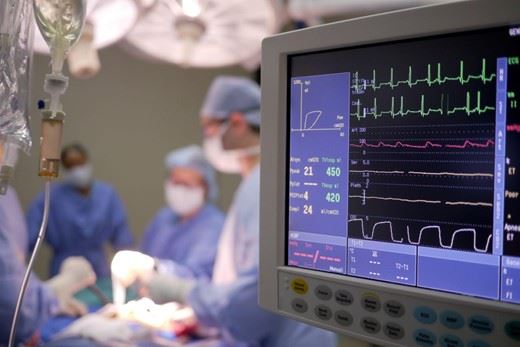
Electromagnetic interference (EMI) refers to unwanted electrical or radio-frequency energy that can disrupt the normal operation of electronic devices. In medical environments, EMI can come from many sources, including smartphones, Wi-Fi networks, Bluetooth devices, motors, and even other nearby medical equipment. These disturbances may cause signal errors, system malfunctions, or incorrect readings in critical devices such as patient monitors or imaging systems, potentially putting patient safety at risk.
To address these risks, the IEC 60601-1-2 defines strict Electromagnetic Compatibility (EMC) requirements. This standard ensures that a device can function reliably in the presence of external electromagnetic disturbances while also limiting the amount of electromagnetic noise it emits through proper filtering, shielding, and circuit design.
Hence, medical devices, as well as their power supplies, require immunity to high-frequency fields up to 2.7GHz and must survive electrostatic discharges (ESD) up to 6kV-8kV for contact discharge and 8kV-15kV for air discharge.
The standard also ensures testing conditions are categorized based on the environment, such as professional healthcare facilities, home healthcare settings, and specialized medical environments like MRI systems.
Additional Considerations for Medical Power Supply
Beyond safety compliance and isolation requirements, medical power supply design must also address performance stability, system protection, and long-term operational reliability.
Power Quality and Electrical Performance
Medical equipment requires highly stable and clean power delivery to ensure accurate operation of sensitive electronics. High-quality medical power supplies typically incorporate power factor correction (PFC) to reduce input distortion and support universal input ranges (e.g., 85-264VAC) for global deployment.
Output regulation is also tightly controlled, often within ±1%, with low ripple and noise to prevent signal distortion in diagnostic or monitoring devices. Additionally, fast transient response and sufficient hold-up time help maintain stable operation during sudden load changes or brief power interruptions.
Built-in Safety Protection Features
To safeguard both patients and equipment, medical power supplies rely on multiple protection mechanisms:
- Overcurrent protection prevents excessive current draw during overload conditions.
- Short-circuit protection ensures safe shutdown during wiring faults or unexpected failures.
- Overvoltage protection further prevents downstream component damage caused by abnormal output spikes.
These protection systems work together to maintain safe operation under both normal and fault conditions, improving overall system resilience.
Thermal Management
Medical power supplies must operate reliably under continuous load while managing heat buildup. Common approaches include optimized component placement, efficient heat conduction paths, and convection or baseplate cooling depending on system design. Proper thermal management not only enhances performance stability but also extends component lifespan under long operating cycles, especially when the device is compact and enclosed.
Reliability and Long-Term Operation (MTBF)
Medical systems demand extremely high reliability, often measured using Mean Time Between Failures (MTBF). A higher MTBF value indicates longer expected operational life and fewer unexpected failures.
With that in mind, the devices must maintain component quality, conservative electrical derating, and rigorous manufacturing standards to operate continuously in hospitals or critical care environments with predictable lifecycle performance.
Explore Medical Power Supply Solutions at Sinpro
Selecting a medical power supply is not just a design decision; it is a compliance-critical process that requires a deep understanding of international standards, safety classifications, and system-level risk management. Working with an experienced manufacturer is essential to navigate these complex requirements efficiently while ensuring patient safety, regulatory approval, and long-term product reliability.
Sinpro is a professional medical power supply manufacturer and developer specializing in high-reliability AC/DC solutions. Our medical-grade products are designed and certified in accordance with IEC 60601-1, helping OEMs meet global safety and performance requirements with confidence.
Featured Medical Power Supplies
External Solutions
Highly reliable external medical power supply solution meeting IEC 60601-1 standards.
Advanced power adaptation with enhanced safety for diverse healthcare environments.
Robust power delivery with strict EMC compliance for sensitive medical equipment.
Internal Solutions
Open-frame internal medical power supply designed for compact integration.
High-power internal solution supporting universal input ranges for global deployment.
HKA600 Series
Ultra-high power density in a low-profile 1.50" design, up to 600W output.
Our latest product lines are for universal applicability, allowing a single power solution to support multiple industries, including ITE (IEC 62368), medical (IEC 60601), household (IEC 60335), and industrial (IEC 61558). This helps manufacturers achieve SKU consolidation and simplify global supply chain management.
All key series are rated for Overvoltage Category III (OVC III), enabling direct connection to the power grid with enhanced surge protection, while also ensuring clean signal integrity through Impedance Stabilization Network (ISN) compliance testing, reducing interference in sensitive medical and communication systems.
The HKA600 series further extends performance capability with ultra-high power density in a low-profile 1.50" design, up to 600W output, and efficiency reaching 95%. It supports both convection and forced-air cooling modes and is certified for dual safety standards, including 2xMOPP medical compliance, making it suitable for demanding medical and industrial environments.
Why Choose Sinpro?
Sinpro allows for accelerated time-to-market through responsive technical support and streamlined logistics. We also support tailored customization covering electrical and mechanical modifications for system-level integration.
For our products, we offer high reliability under ISO 13485 and ISO 9001 standards with 100% burn-in testing for long-term stability. What’s more, Sinpro provides clear technical documentation and compliance support to help OEMs simplify certification processes and reduce development risk.